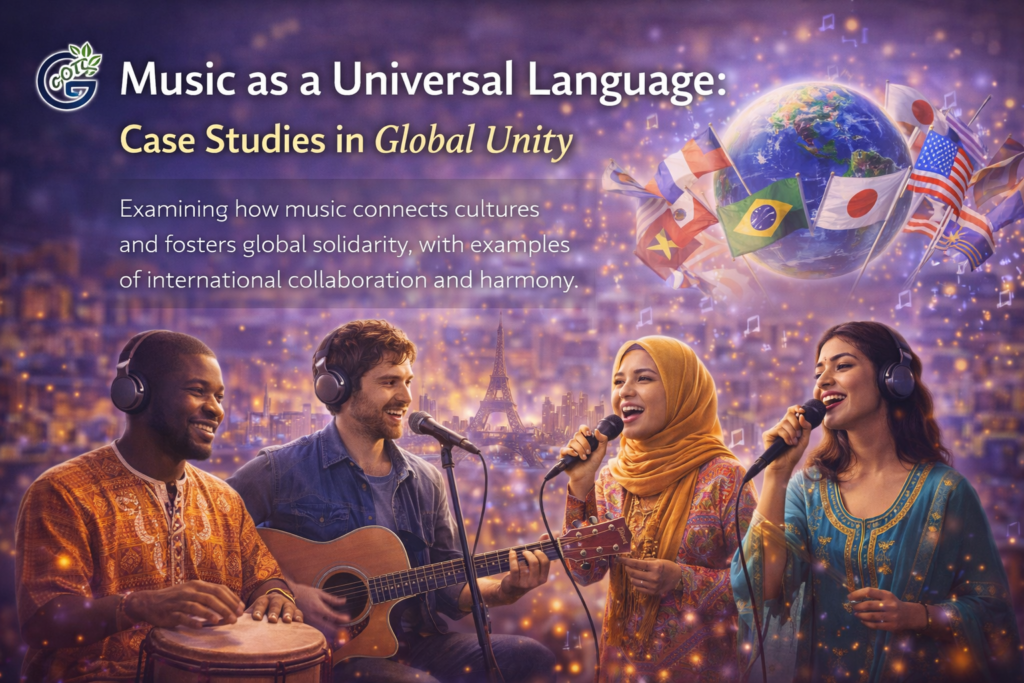

In a world often divided by language, religion, and politics, music remains the most effective bridge for cultural understanding. It is often described as a universal language because it bypasses the cognitive barriers of speech and speaks directly to the limbic system. A rhythm from West Africa can resonate with a listener in Tokyo just as a symphony from Berlin can stir emotions in a student in São Paulo.
Historical case studies show that music has often paved the way for diplomacy where official channels failed. From the “Jazz Ambassadors” of the Cold War to modern global benefit concerts, musical collaboration fosters empathy. When artists from different backgrounds perform together, they create a shared space that celebrates diversity while highlighting our common humanity.
Development programs are increasingly using music to promote social cohesion in conflict zones. By bringing youth together to create and perform, these initiatives build trust and provide a healthy outlet for expression. Ultimately, music reminds us that while our stories may differ, the fundamental “sound” of the human experience is shared by everyone.


