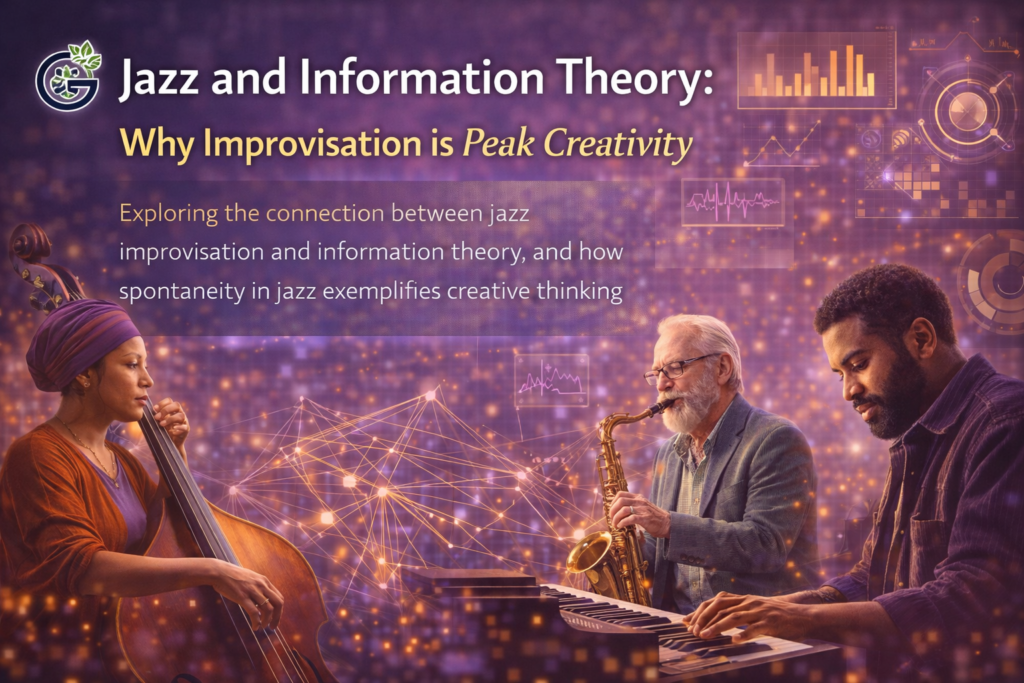

In the world of creative performance, jazz improvisation is often cited as the ultimate display of mental agility. Neuroscience has begun to compare the brain of a jazz musician in full flow to that of a mathematician or a linguist. When a musician improvises, they are essentially solving complex harmonic problems in real-time, making thousands of split-second decisions while maintaining a social conversation with their fellow performers.
This process is a fascinating case study in “Information Theory.” The improviser must balance predictability with surprise. If the music is too predictable, it becomes boring; if it is too chaotic, the listener loses the thread. Peak creativity occurs in the “sweet spot” at the edge of order and chaos. This state of “flow” allows the artist to bypass self-censorship, leading to innovations that could never be planned in a structured environment.
The lessons of jazz extend far beyond the stage. The ability to improvise—to respond creatively to unexpected changes—is a vital skill in the modern world. By studying how jazz musicians handle mistakes and turn them into new opportunities, we can learn a lot about resilience, teamwork, and the nature of creative genius.


